Product Description
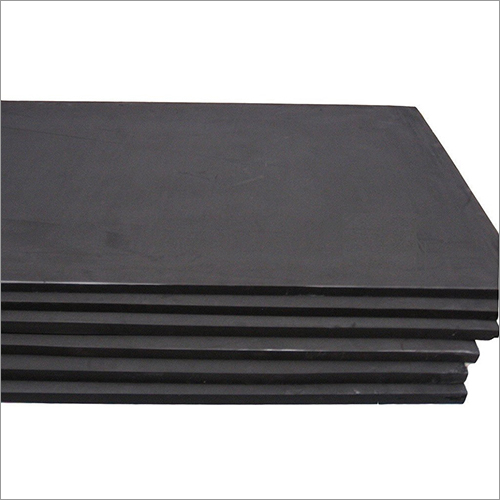
We have extensive experience in the market that empowers us in emerging as a trusted manufacturer and exporter of Bitumen Impregnated Expansion Joint Filler Board. It is suitable for forming joints between in-situ and pre-cast concrete construction. To process and manufacture this board, our diligent manpower uses finest quality materials. This board displays excellent resistance to compression, with outstanding recovery characteristics. Bitumen Impregnated Expansion Joint Filler Board is light in weight, resistant to high temperature and easy to mount. It is available in different sizes and thickness as per clients requirements.
We generally manufacture in size 1.22 mtr(4 ft) x 1.22 mtr(4 ft) mainly in thickeness of 12 mm, 18 mm, 20 mm & 25 mm
Technical specification
|
Thickness
|
8-20 mm
|
|
Brand
|
Softex
|
|
Shape
|
Rectangular
|
|
Density
|
100 kg/m3
|
|
Temperature
|
-60 to 100 deg C
|
|
Color
|
Black
|
Engineered for Demanding ApplicationsDesigned specifically for industrial use, our Bitumen Impregnated Expansion Joint Filler Board is ideal for demanding infrastructure projects such as highways, bridges, airport runways, and dams. Its robust construction ensures reliable joint movement, minimizes water ingress, and resists varying temperature extremes, making it a dependable choice for both new builds and maintenance projects.
Superior Material PerformanceMade from high-quality rubber and processed to meet IS 1838 (Part II) 2013 and ASTM D 1751 standards, these boards feature excellent resilience and compression recovery. The boards density and low water absorption qualities ensure longevity and sustained performance, while their standard sizing streamlines installation and compatibility with project requirements.
Trusted Exporter and Supplier from IndiaAs a leading manufacturer and supplier based in India, we are committed to delivering premium-grade expansion joint filler boards that cater to international standards. Our efficient production and export processes enable us to deliver consistently across global markets, ensuring timely supply and unwavering product quality.
FAQs of Bitumen Impregnated Expansion Joint Filler Board:
Q: How is the Bitumen Impregnated Expansion Joint Filler Board installed in construction projects?
A: The board is designed for easy installation between concrete slabs or expansion gaps. Simply cut to the required size, place it firmly in the joint gap, and pour concrete or lay asphalt around it as needed. Its standard dimensions can be tailored on-site to fit project-specific requirements.
Q: What are the typical usage areas for this expansion joint filler board?
A: This product is widely used in roads, bridges, airport runways, and dams, where movement accommodation, joint durability, and water resistance are essential. Its robust design makes it suitable for both new construction and maintenance applications in heavy-duty infrastructure.
Q: When should you choose a thickness between 10 mm and 25 mm for the board?
A: The appropriate thickness depends on the expected movement and width of the expansion joint. For smaller joints or lesser movement, use the lower thickness; for larger joints and greater expansion or contraction, select higher thickness for enhanced cushioning and recovery.
Q: Where does this filler board conform to relevant standards and what are they?
A: This product is manufactured and tested to meet IS 1838 (Part II) 2013 and ASTM D 1751 standards, ensuring it matches international benchmarks for performance, safety, and durability.
Q: What are the main benefits of using this expansion joint filler board in infrastructure projects?
A: Key benefits include high compression recovery (minimum 70%), low water absorption (<15% by weight), resistance to wide temperature ranges, and durable rubber construction, ensuring long-term protection and flexibility for expansion joints in various environments.
Q: Can the board be used in extreme temperature conditions?
A: Yes, this expansion joint filler board is engineered to withstand temperatures from -30C to +70C, making it suitable for use in both freezing and hot climates without compromising its structural integrity or performance.
Q: What is the process for sourcing and exporting this product from India?
A: As an experienced exporter and manufacturer, we follow a streamlined process that includes quality control, standardized packaging, and shipment according to international client requirements. Orders can be placed directly through our sales team, with prompt delivery to global destinations.

 Send Email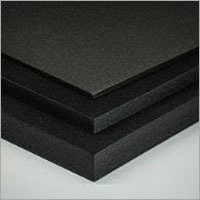





 Send Inquiry

 Send Inquiry
 Send SMS
 Call Me Free


 English
 Spanish
 French
 German
 Italian
 Chinese (Simplified)
 Japanese
 Korean
 Arabic
 Portuguese